What to Wear on Race Day
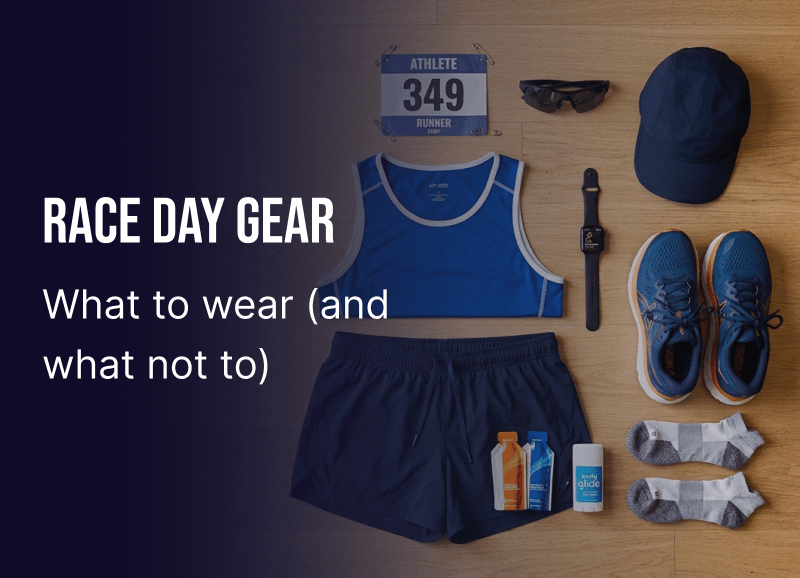
Race day gear decisions should be boring. Everything you wear should be something you've worn before, in similar conditions, for a similar distance. The goal is zero surprises.
That sounds simple. But race morning creates a strange decision-making environment. You're nervous. The weather might be different from what you trained in. The expo the day before was full of shiny new gear that looked amazing. And now you're standing in your hotel room at 5am trying to decide what to put on your body for the next few hours.
Here's how to make that decision well before you're in that situation.
The one rule that matters most
Nothing new on race day. Not the shoes, not the shorts, not the socks, not the sports bra, not the hat, not the sunscreen, not the body glide placement.
Everything you wear should have been tested on a training run of at least moderate distance. Tested doesn't mean you tried it on and it felt fine standing in your bedroom. It means you ran in it for an hour or more and confirmed it doesn't chafe, slip, ride up, fall down, or cause problems.
New shoes are the most dangerous offender. Those carbon-plated race shoes might be amazing, but if you haven't put at least 20 to 30 training miles in them, race day is not the time to find out they cause a hot spot on your left pinky toe at mile 15.
Shoes
Your shoes are the most important gear decision. Everything else is comfort. Shoes affect performance.
For a 5K or 10K, lighter shoes with less cushion are fine. These distances don't demand the same protection as longer races. Speed comes from fitness, not shoes. Whatever you've trained in will work.
For a half marathon, the balance shifts slightly toward more cushion. You're on your feet for 90 minutes to two hours or more. A responsive, well-cushioned shoe you've trained in is the right call. Carbon-plated shoes can help here, but only if you've trained in them enough to know they work for your foot and your gait.
For a marathon, cushion and energy return matter more than at any other distance. Your legs will take thousands of additional impacts compared to a half. Whatever shoe you choose, make sure it's the shoe your feet know well. Even the best marathon shoe needs 30 to 50 miles before race day.
Clothing
Dress for how you'll feel at mile 3, not how you feel standing at the start. You'll warm up significantly once you're moving. If the temperature is above 50°F, a singlet or short sleeve is almost always right. If you're cold at the start, wear a throwaway layer you can ditch in the first mile.
On shorts versus tights: below 40°F, tights or half tights make sense. Above that, shorts are usually fine. Whatever you've been training in for similar temperatures is the right answer.
On socks: wear the socks you've trained in. This sounds trivial until you're dealing with blisters at mile 8 because you grabbed a different pair on race morning. Moisture-wicking running socks that you've run long in before are the only option.
On hats and sunglasses: if you train in them, race in them. If you don't, leave them at home.
Anti-chafe
Chafing is the race day problem nobody talks about until it ruins their day. Body Glide, Vaseline, or similar products should go on every potential friction point. Inner thighs, underarms, nipples especially for men in longer races, sports bra edges, waistband areas, and anywhere your clothing has a seam that contacts skin.
Apply generously. In humid conditions or long races, carry a small tube for reapplication. Chafing that starts at mile 5 becomes a real problem by mile 20.
Weather adjustments
Check the forecast the night before and again on race morning. Have a contingency.
If it's warmer than expected, go as light as possible. Light colors, hat or visor for sun protection, extra attention to hydration.
If it's colder than expected, arm sleeves are the most versatile cold-weather racing accessory. You can push them down or pull them off if you warm up. Gloves are cheap and easy to ditch. A throwaway long-sleeve layer for the first mile is better than overdressing for the whole race.
If it's raining, a lightweight cap with a brim is the single best accessory. It keeps water out of your eyes while letting your body breathe. Avoid waterproof jackets unless it's both cold and rainy. And apply body glide everywhere, because wet fabric chafes faster.
The dress rehearsal run
Three to four weeks before race day, do a full dress rehearsal long run. Wear exactly what you plan to wear on race day. Use exactly the same fueling. Run at or near race effort for part of it.
This is your final check. If anything is wrong, you still have time to fix it. After the dress rehearsal, your gear decisions are made. Lay everything out the night before and put it on without thinking.
Race morning should be boring. The goal is to show up with zero gear questions and zero surprises, so all your mental energy goes toward running well.
Oh, and make sure Milo is on your wrist. Technically optional. But, you should.