What to Eat While Training for a Race
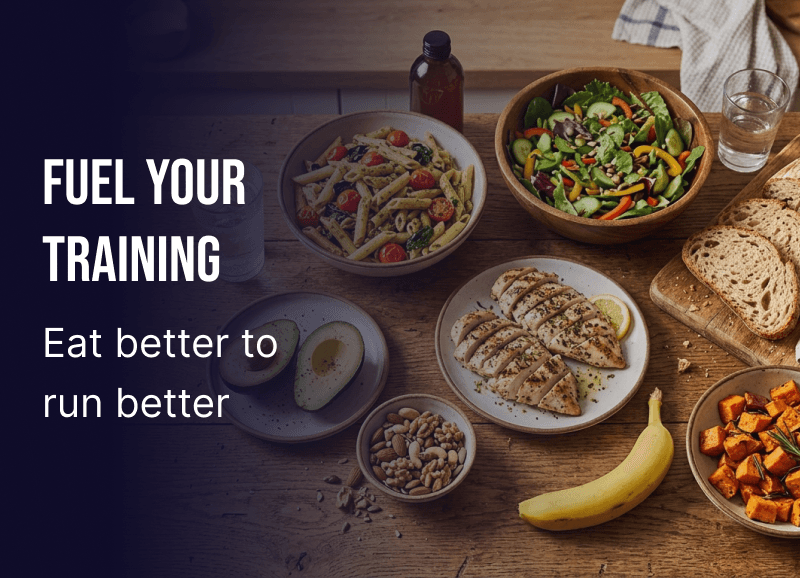
Nutrition is where most runners leave the biggest performance gains on the table. You can have perfect fitness and perfect pacing, and a fueling mistake can still wreck your race. The good news is that race nutrition isn't complicated. It just needs to be practiced, and that practice starts weeks before race day, not the morning of.
The weeks before: carbohydrate loading done right
Carbohydrate loading isn't eating a massive pasta dinner the night before. That's a recipe for feeling heavy and sluggish at the start line.
Real carbohydrate loading is a gradual process that starts three to four days before your race. You're not eating dramatically more food overall. You're shifting the composition of what you're eating toward carbohydrates and away from fat and protein, while also tapering your training so your body can actually store what you're giving it.
Aim for around 8 to 10 grams of carbohydrates per kilogram of bodyweight per day in the two to three days before a marathon or half marathon. For shorter races like a 5K or 10K, this matters less since you won't be depleting your glycogen stores mid-race anyway.
Good carbohydrate sources in the days before: rice, pasta, bread, potatoes, oats, bananas. Keep fat and fiber lower than usual to avoid digestive issues and make room for more carbohydrates without eating huge volumes of food.
Avoid anything new. This applies to the whole pre-race week, not just race morning. A new restaurant, a new food, a new supplement, any of these can introduce a variable your body isn't used to at exactly the wrong time.
The night before
Keep it simple. A carbohydrate-heavy meal you've eaten dozens of times before. Pasta with a light sauce, rice with chicken, a familiar bowl of whatever works for you. Eat at a normal dinner time, not late. Give your body time to digest before you sleep.
Don't overeat. The goal is to feel comfortable and well-fueled, not stuffed. You're topping off tanks that have already been filling for several days. One big meal the night before won't save you if the preceding days were poor.
Stay well hydrated through the evening but don't chug water right before bed. Consistent hydration over the whole day is more effective than trying to catch up in the final hours.
Race morning
Eat two to three hours before the start. This gives your body time to digest and settle. Eating too close to the start is one of the most common race morning mistakes. That food is going to sit in your stomach for the first few miles.
Stick to simple carbohydrates you've eaten before. A bagel with peanut butter. Oatmeal with banana. Toast with honey. Nothing high in fiber, nothing high in fat, nothing new.
Eat enough to feel satisfied but not full. You should feel light when you start running. If you can feel your breakfast at mile one, you ate too much or too close to the start.
On coffee: if you normally drink it, drink your normal amount. Caffeine is a proven performance enhancer that reduces perceived effort and can improve endurance meaningfully. But race morning is not the time to double your intake. And if you don't normally drink coffee, don't start today.
On hydration: sip water in the hours before the race. A good guideline is 16 to 20 ounces in the two to three hours before the start, then a few sips in the corral.
During the race: the short version
For a 5K or 10K, you don't need mid-race fuel. Your body has enough stored glycogen. A sip of water at an aid station is fine in warm weather. Just run.
For a half marathon or marathon, fueling mid-race is important but that's a longer conversation for the execute section of this series. The short version: nothing new, start earlier than you think you need to, and practice your fueling plan during training long runs before race day.
After the race
Get carbohydrates and protein in within 30 minutes of finishing. A banana, chocolate milk, whatever the race provides. Then eat a proper meal within two hours. Carbohydrates, protein, don't overthink it. Your body just did something hard. Feed it.
How your nutrition shows up in your training data
Milo doesn't track what you eat, but it does show you the downstream effects of how well you're fueling your training. Your readiness score, your sleep quality trends, your pace data over time, all of these are influenced by nutrition even if nutrition isn't the variable being measured directly.
If you're keeping any kind of food log on your own and you start noticing that your readiness scores dip in weeks where your eating was inconsistent, or that your easy pace trends slower during periods of under-fueling, that correlation is real and worth paying attention to. The data in Milo gives you a feedback loop. What you put into your body determines how much of that training your body can actually absorb and adapt to.
Better fueling leads to better recovery scores, better sleep quality, and better fitness trends over time. You don't need Milo to tell you what to eat. But it can show you whether what you're eating is working.