The Science of Recovery: How Rest Days Make You Faster
How rest days actually make you faster
Running culture glorifies effort. More miles. Harder workouts. Fewer days off. But fitness is not built by stress alone. It is built by stress followed by recovery.
Training applies load to the body. Recovery is where adaptation happens. Without it, progress stalls. With it, fitness compounds. This is true for beginners and experienced runners alike, whether you are training for a half marathon or building long-term aerobic fitness.
What training really does to your body
Every run adds training stress. Muscle fibers incur small amounts of damage. Glycogen stores drop. The nervous system works harder. Hormones shift. This stress is not a problem. It is the signal that tells the body to improve.
What many runners miss is timing. Improvement does not fully happen during the run itself. It also happens afterward, during recovery.
With enough rest, nutrition, and sleep, the body rebuilds muscle tissue, strengthens connective structures, increases mitochondrial density, and improves cardiovascular efficiency. This process is known as the supercompensation cycle. Training creates fatigue. Recovery allows the body to rebuild stronger than before.
When recovery is insufficient, that signal never resolves. The body remains in repair mode. Fitness plateaus or declines. This is why understanding recovery matters just as much as understanding workouts.
Why more running does not always mean better results
It is easy to assume that more mileage automatically leads to better performance. Sometimes it does. Often it does not. When training load increases faster than recovery capacity, predictable patterns begin to appear.
Easy runs feel harder than expected
Pace drops at the same heart rate
Workouts lose control
Sleep quality declines
Motivation fades
These are not signs of weakness. They are signs of accumulated fatigue.
High-performing runners do not avoid stress. They manage it. Easy days stay easy. Rest days are protected. Recovery becomes deliberate instead of accidental.
What actually happens on rest days
Rest days allow multiple systems to recover and adapt.
Muscle repair: Damaged fibers rebuild stronger, improving durability and reducing injury risk.
Energy restoration: Glycogen stores refill and hormonal balance stabilizes, supporting quality workouts later in the week.
Nervous system recovery: Hard running taxes coordination and efficiency. Rest restores timing, control, and running economy.
Connective tissue adaptation: Tendons and ligaments recover more slowly than muscles. Rest days protect them from overload, especially during high-mileage phases.
Skipping rest does not make runners tougher. It makes them fragile.
Rest days versus recovery runs
Recovery does not always mean complete rest, but it always means reduced stress. There are two primary recovery tools.
Complete rest: No running. Light movement only. Most useful after races, long runs, or weeks with high training stress.
Easy recovery runs: Short runs at a relaxed, conversational pace. These promote blood flow and recovery without adding meaningful load.
Both approaches are valuable. Intent matters more than structure. If an easy run feels like work, it is not recovery.
Nutrition and recovery
Recovery does not happen without fuel. Carbohydrates replenish glycogen after long runs and hard workouts. Protein supports muscle repair and connective tissue health. Overall energy intake matters, especially during half marathon and marathon training.
Without adequate fuel, adaptation slows even if training looks perfect on paper.
Sleep is the most powerful recovery tool
No recovery strategy matters more than sleep. Most training adaptations occur during deep sleep. Muscle repair accelerates. Hormones regulate. Motor patterns consolidate.
Runners following structured training often need more sleep than usual. Many benefit from an extra thirty minutes per night during heavy training blocks. Poor sleep limits progress regardless of mileage or intensity.
If there is one recovery habit worth protecting, it is sleep.
Recovery and injury prevention
Adaptation and injury prevention are closely linked. When training stress outpaces recovery, tissues accumulate microdamage faster than they can repair. This is how common running injuries develop.
Managing recovery is not just about getting faster. It is about staying healthy enough to train consistently. Consistency remains the strongest driver of long-term improvement.
Making recovery actionable with training load
Many runners know rest matters but struggle to know when to rest and how much. Training load metrics help make recovery practical.
Acute Training Load reflects recent stress
Chronic Training Load reflects long-term fitness
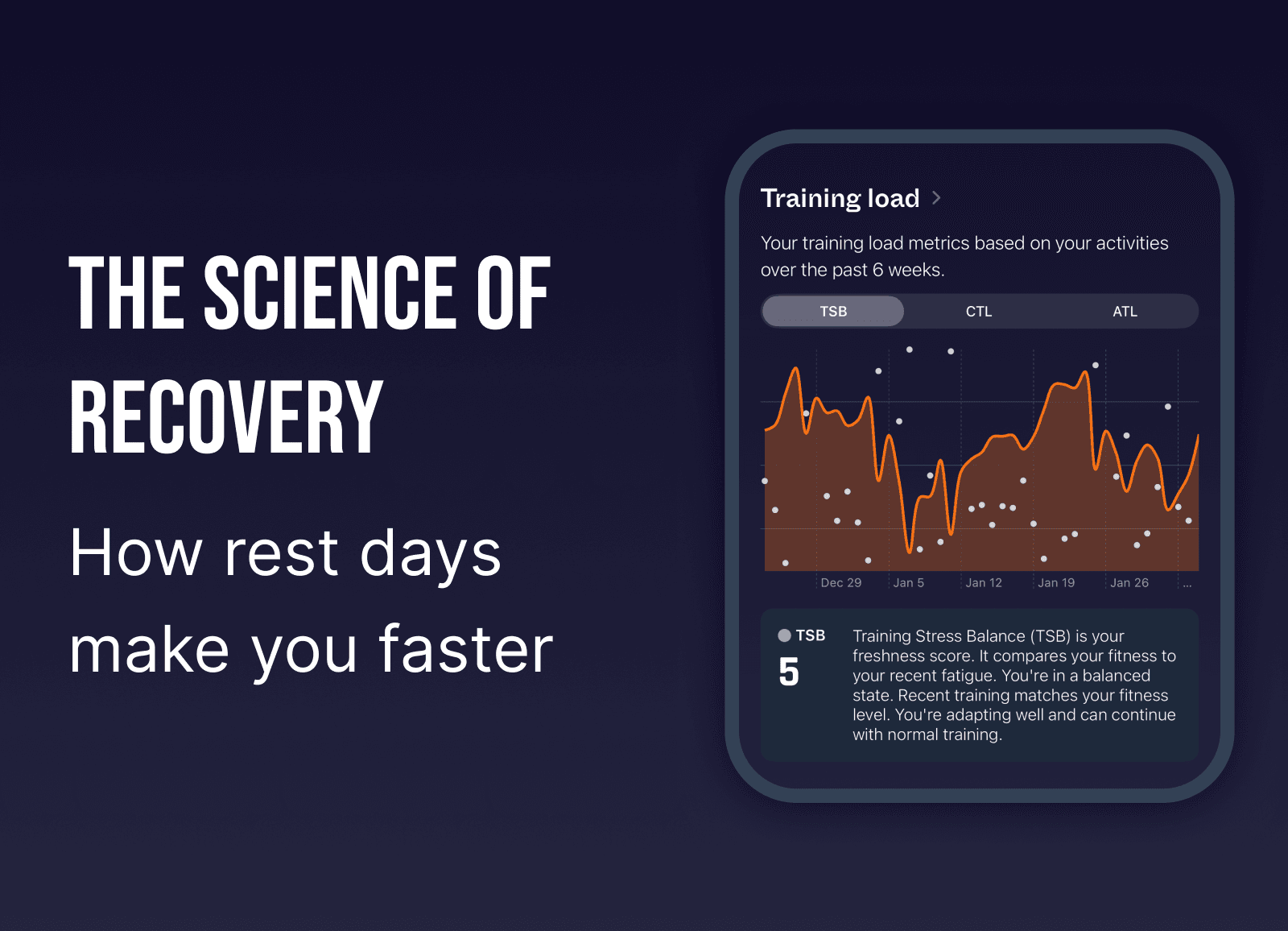
Training Stress Balance shows the relationship between fatigue and fitness
Together, these metrics explain why a run feels light or heavy and help guide smarter decisions around rest days, recovery runs, and quality sessions.
How Milo fits in
Milo is built to help runners understand recovery without guesswork.
By tracking Acute Training Load, Chronic Training Load, and Training Stress Balance, Milo shows how your body is responding to training over time. You can see when fatigue is building, when fitness is consolidating, and when recovery will actually improve performance.
Instead of guessing, we can help you decide:
When to schedule a rest day
When to keep runs truly easy
When you are ready for quality work
Recovery becomes part of training, not an afterthought.
The long view
Distance running is not about winning a single week. It is about stacking months of consistent work. Runners who improve year after year are not the ones who avoid rest. They are the ones who understand how stress and recovery work together. Recovery is not lost time. It is where fitness becomes durable.
Train with intention. Recover with purpose. Let the work settle.