Running Workouts Explained: What Each Run Does
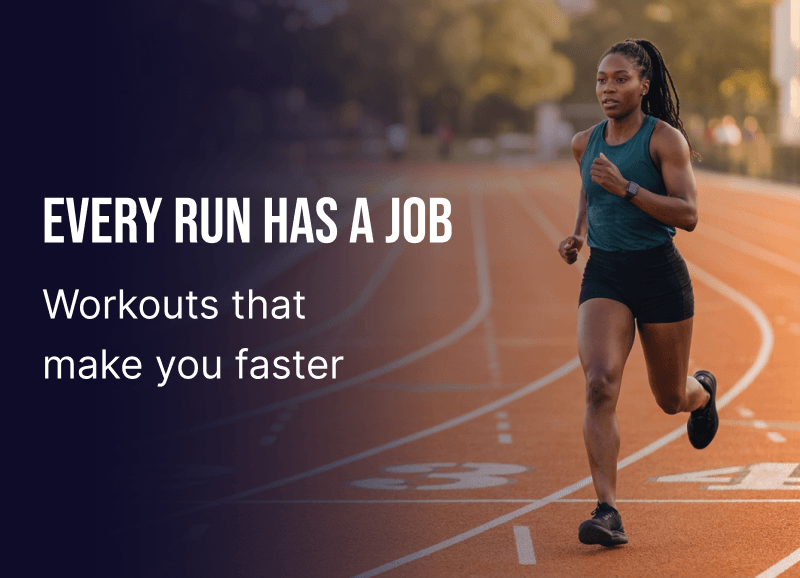
When you're just running, every run is basically the same thing. You go out, you move forward, you come back. Some days feel better than others, but the run itself doesn't really have a purpose beyond getting some exercise and ticking the box.
When you're training, every run has a job. And those jobs are different enough that they actually have names.
Understanding what each type of running workout does is probably the single biggest unlock for most recreational runners. Not because the names matter, but because once you understand the purpose behind each one, you stop doing the same thing every run.
Easy runs
This is the run you should be doing most often, and probably aren't doing nearly enough of. An easy run is genuinely easy. Conversational running you can hold for a long time. You could sustain this pace for hours if you had to. If you're going by feel, it should almost feel too slow to be useful.
What easy runs do is build your core endurance, the aerobic foundation that everything else sits on top of. They're also supposed to make up about 80 percent of your weekly running volume, which surprises most runners when they first hear it. The instinct is to push harder to get fitter faster, but pushing harder on your easy days just adds fatigue without adding adaptation. It cuts into your ability to go hard when it actually matters.
The most common mistake is running easy runs too fast. Easy doesn't mean comfortable, it means genuinely easy. The pace that feels almost too slow. If you're questioning whether you're going slow enough, you probably aren't.
Marathon pace runs
Marathon pace is a steady effort you can hold for the full marathon distance. It sits between easy and threshold, controlled and sustainable but purposeful.
What marathon pace runs do is build the strength and efficiency you need specifically for long-distance racing. They train your body to run economically at race effort, which is different from just running a lot of easy miles. For anyone training for a marathon or half marathon, this is where a lot of the race-specific work happens.
Threshold runs
A threshold run is comfortably hard running you could maintain for about an hour. You can speak in short sentences but not full paragraphs. It sits right at the edge of sustainable.
What threshold runs do is help you run faster for longer by improving your lactate threshold, which is the point where your body starts producing lactate faster than it can clear it. Raise that threshold and you can hold a faster pace before things start to fall apart. This is the main engine behind half marathon and marathon performance.
The typical format is 20 to 40 minutes at threshold pace after a warmup. Not a sprint, not easy. A controlled and sustained push.
VO2 max intervals
VO2 max intervals are hard efforts you can hold for up to about five minutes, with recovery periods between each one. The classic version is repetitions on a track with jogging rest between sets.
What VO2 max training does is increase how much oxygen your body can use and lift your top-end speed. These intervals force your heart and lungs to work at close to maximum capacity in short, manageable doses, which over time raises the ceiling of your aerobic system.
The key thing to understand is that VO2 max intervals are harder than threshold runs but much shorter. You can't sustain this pace for 30 minutes and you're not supposed to. The recovery between reps is what makes the workout both possible and productive.
Speed reps
Speed reps are short, fast running efforts up to about two minutes, harder than VO2 max intervals but much briefer, with full recovery between each one.
What speed reps do is sharpen your form and power while actually reducing long-term injury risk. Short speed work teaches your body to move efficiently at fast paces, which carries over into every other type of run you do. Most recreational runners skip this entirely, which is a shame because it doesn't take much to see the benefit.
Recovery runs
Recovery runs are the shortest and slowest runs in your training week. Done the day after a hard session, they exist to promote blood flow and active recovery without adding any meaningful training stress.
Very easy jogging to loosen up tired legs. That's really it. Recovery runs help reduce soreness, improve blood flow, and help you absorb the harder training you've already done. They don't make you fitter, and that's completely fine because that's not their job.
If you skip the recovery run and take a rest day instead, that's usually fine too. The point is that if you do run the day after a hard session, it needs to be genuinely easy. Not moderate, not "I'll see how I feel."
Why understanding your run types actually matters
When every run has a purpose, you stop guessing. Tuesday isn't just a run, it's an easy day that gives your body time to absorb yesterday's intervals. Thursday isn't just another run, it's a threshold session that's slowly pushing your ceiling higher.
You're not running more. You're running with intent. And that's really the difference between exercise and training.
Milo calculates all of these training paces automatically based on your Milo Run Score, which is derived from your fastest recent run. Every pace zone is set specifically for where your fitness is right now, and they adapt as you improve. You don't have to figure out what your threshold pace should be or guess whether you're running easy enough. It's already there, calibrated to you, every time you head out.